Trade terms
All about Incoterms: the eleven rules, what they decide, and how to choose
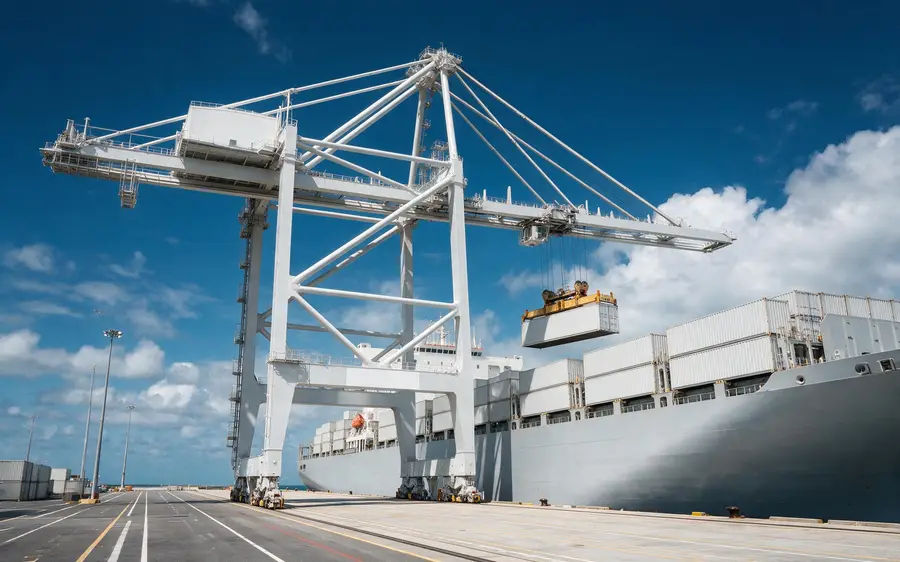
Three letters at the end of a purchase order carry more weight than almost anything else in it. FOB Laem Chabang, EXW Shenzhen, DDP Bangkok — each of those is a complete allocation of who arranges the transport, who pays for each leg, who clears the goods at each border, and the exact moment at which the risk of loss or damage stops being the seller's problem and becomes the buyer's.
The rules are published by the International Chamber of Commerce (ICC), and the edition in force is Incoterms 2020, effective from 1 January 2020. They are not law, and they are not part of any country's regulations. They apply because the sales contract says they apply — which is why the edition year and the named place matter every bit as much as the three letters do.
This guide sets out what an Incoterms rule decides and what it deliberately leaves alone, puts all eleven rules of Incoterms 2020 side by side, and works through the places where the choice most often costs money on a Thai import or export.
What an Incoterms rule decides — and what it leaves to you
Every rule allocates four things between seller and buyer, and only these four: which party arranges carriage and to what point; which party bears the cost of each leg and each charge along it; the precise point at which risk of loss or damage passes; and which party handles the export and import formalities and provides the documents the other one needs.
What causes most of the arguments is what the rules deliberately leave out. An Incoterms rule says nothing about:
- The price, the currency or the payment terms — a rule shifts costs between the parties, but what those costs do to the price is a commercial negotiation
- When ownership of the goods passes, which is governed by the sales contract and the law applying to it, not by the delivery term
- The law governing the contract, the forum for disputes, and what happens on a breach such as late delivery or non-payment
- Whether the goods may lawfully be exported or imported at all — licences, permits, prohibitions and sanctions sit outside the rules entirely
- The contract of carriage itself: the carrier's liability limits and its own terms are a separate agreement, and the carrier is not a party to your Incoterms rule
Write the edition and the place, not just the three letters
A term is only complete in the form rule, named place, edition — for example “CIF Laem Chabang, Incoterms 2020” or “FCA Bang Phli, Samut Prakan, Incoterms 2020”. All three parts do work, and a term missing one of them leaves a gap that each side will later read in its own favour.
The named place is not decoration. Under EXW, FCA, DAP, DPU and DDP it is the delivery point — where the seller's obligation ends and risk passes — so “DAP Bangkok” is not precise enough to perform: it needs the address the goods are actually delivered to. Under CPT, CIP, CFR and CIF the named place is the destination the seller pays carriage to, while risk has already passed at origin. Those four rules carry two geographies at once, and confusing them is the most expensive misreading in the whole system.
The edition year matters because the rules change between editions. Delivered at Terminal (DAT) became Delivered at Place Unloaded (DPU) in 2020, and the insurance a seller must buy under CIP was raised at the same time. A contract that says only “CIF, Incoterms” leaves the parties to argue about which edition they meant. Earlier editions remain perfectly usable if that is what both sides intend — but then the contract has to say so.
The eleven rules, in two families
Incoterms 2020 has eleven rules in two groups, and the grouping is about the kind of transport each set was written for.
Seven rules for any mode of transport
EXW, FCA, CPT, CIP, DAP, DPU and DDP work for air, road, rail, sea and any combination of them, including containerised sea freight. If more than one mode is involved, the rule has to come from this group.
Four rules for sea and inland waterway transport only
FAS, FOB, CFR and CIF were written for cargo handed over at the quay or loaded directly onto a vessel — bulk, break-bulk, project cargo and anything else that is not stuffed into a container days before it sails. They have no meaning on an air waybill, and using one for air freight leaves the delivery point undefined.
| Rule | Name | Delivery and risk pass | Export clearance | Import clearance |
|---|---|---|---|---|
| EXW | Ex Works | At the seller's premises, when the goods are placed at the buyer's disposal — not loaded onto any vehicle | Buyer | Buyer |
| FCA | Free Carrier | When the goods are handed to the carrier the buyer named: loaded onto the buyer's vehicle at the seller's premises, or ready for unloading at any other named place | Seller | Buyer |
| CPT | Carriage Paid To | When the goods are handed to the first carrier at origin, although the seller pays carriage to the named destination | Seller | Buyer |
| CIP | Carriage and Insurance Paid To | As CPT — at the first carrier — and the seller must also insure the goods to the named destination | Seller | Buyer |
| DAP | Delivered at Place | On arrival at the named place, on the arriving vehicle, ready for unloading by the buyer | Seller | Buyer |
| DPU | Delivered at Place Unloaded | On arrival at the named place, once the seller has unloaded the goods — the only rule that obliges the seller to unload | Seller | Buyer |
| DDP | Delivered Duty Paid | On arrival at the named place, cleared for import with duty and tax paid, ready for unloading | Seller | Seller |
| FAS | Free Alongside Ship | When the goods are placed alongside the vessel at the named port of shipment | Seller | Buyer |
| FOB | Free on Board | When the goods are on board the vessel at the named port of shipment | Seller | Buyer |
| CFR | Cost and Freight | On board at the port of shipment, although the seller pays freight to the named destination port | Seller | Buyer |
| CIF | Cost, Insurance and Freight | On board at the port of shipment, as CFR, and the seller must also insure the goods to the destination port | Seller | Buyer |
Two rows are worth reading twice. EXW is the only rule where the buyer is responsible for export clearance in the seller's own country, and DDP the only one where the seller is responsible for import clearance in the buyer's. They sit at opposite ends of the scale, and they are the two most often chosen for a reason that does not survive the first difficult shipment.
Risk and cost are two separate lines
The most common misunderstanding in the whole system is the assumption that the party paying for the transport is the party carrying the risk during it. Four rules split those apart on purpose: CPT, CIP, CFR and CIF. Under all four the seller books and pays the main carriage to a destination — and risk passes to the buyer at origin, long before the goods get there.
A worked case makes it concrete. Goods bought CIF Bangkok are lost when the vessel is damaged mid-ocean. The seller has performed: it delivered on board at origin, paid the freight and took out the insurance the rule requires. The loss is the buyer's, and the buyer's remedy is the claim on that insurance policy — which is precisely why the cover level under CIF and CIP is written into the rule rather than left to the parties.
The other groups keep cost and risk together. Under EXW, FCA, FAS and FOB both stay with the buyer from the delivery point at origin onwards. Under DAP, DPU and DDP both stay with the seller all the way to the named place at destination. Those are the rules where “who pays” and “who bears the loss” give the same answer.
Who has to insure, and for how much
Only two of the eleven rules oblige anyone to insure the cargo: CIF and CIP. Under the other nine, insurance is optional and belongs to whichever party is carrying the risk on the leg in question — which is a decision, not an omission, and it should be made deliberately.
- CIF — the seller insures to the named destination port, and the minimum required is Institute Cargo Clauses (C): a limited, named-perils cover written with bulk commodities in mind
- CIP — the seller insures to the named destination place, and the minimum required is Institute Cargo Clauses (A), an all-risks level of cover. This is one of the real changes in Incoterms 2020; under the 2010 edition both rules sat at the (C) level
- Both rules require cover of at least 110 per cent of the contract value, in the currency of the contract, and the buyer must be able to claim on the policy directly
- Under every other rule nobody is obliged to insure. On EXW, FCA, FAS and FOB purchases the buyer is uninsured from the origin delivery point unless it arranges cover itself
Two things follow from that. The 110 per cent is a floor and not a target — it exists to cover the buyer's lost margin and incidental costs, and a shipment with a high duty burden or a long inland leg can justify more. And the obligation is to buy a policy, not to be answerable for the loss: a seller who takes out Institute Cargo Clauses (C) on a container of garments has done what CIF requires, even if the damage that actually happens falls outside that cover.
Choosing a rule: four questions, in order
There is no rule that is best in general. The right one for a given trade falls out of four questions, and they are worth asking in this order.
-
Who is better placed to arrange each leg?
The party that ships regularly on the lane, knows the terminal and has a standing relationship with a forwarder there will buy that leg more cheaply and more reliably than the party that ships it twice a year. Give each leg to whoever that is, and let the price reflect it.
-
Where do you want risk to pass?
Risk should pass where control passes. A rule that leaves you carrying the risk over a leg you cannot see, cannot instruct and cannot protect is the one that hurts — which is the whole objection to using FOB for a container.
-
Who can lawfully clear the goods at each border?
Export clearance needs a party that is registered as an exporter in the origin country; import clearance needs a party that can be importer of record in the destination country. Confirm both before choosing the rule, not after. EXW and DDP both fail this test routinely.
-
How is the shipment being paid for?
Payment terms drive documents. If a letter of credit requires an on-board bill of lading, the rule you agree has to be able to produce one — and under Incoterms 2020, FCA can.
Containerised cargo: FCA rather than FOB
FOB, CFR and CIF were written for goods loaded over a ship's side, and their delivery point is the moment the cargo is on board. A container does not work that way. You hand the box to the terminal or the container freight station days before the vessel loads it, and from that moment you cannot see it, move it or protect it — but under FOB the risk is still yours until it is loaded. On a busy lane that gap runs from a couple of days to a week, and it sits entirely with the seller.
FCA closes the gap by putting delivery where the handover actually happens — at the seller's premises, the container yard or the freight station named in the term. The ICC's own guidance is to use FCA for containerised cargo, and it has been for years.
The reason FOB survived anyway was documentary. Banks operating a letter of credit usually require an on-board bill of lading, and a seller who delivered at a container yard under FCA had no clear right to one. Incoterms 2020 deals with this directly: under FCA the parties may agree that the buyer will instruct its carrier to issue an on-board bill of lading to the seller once the goods are loaded. That removes the last practical reason to put a container on FOB.
The two ends: EXW and DDP look simple and rarely are
EXW and DDP are chosen for the same reason — one party wants nothing to do with the logistics — and they cause trouble for the same reason: each puts a customs formality on the party least able to complete it.
EXW puts export clearance on the party that usually cannot do it
Under EXW the seller does nothing but make the goods available at its own premises — it is not even obliged to load them onto the collecting vehicle. Everything after that, export clearance included, is the buyer's, in a country where the buyer may have no registered presence and no standing to file a declaration in its own name.
For a Thai exporter this has a tax consequence, not just a paperwork one. The export declaration names the exporter, and that document is the evidence supporting the zero-rated VAT treatment of an export sale. A Thai seller who genuinely sells EXW, and so is not the party filing the export entry, can find itself holding a sale it cannot evidence as an export when the Revenue Department asks.
In practice most “EXW” deals are performed as FCA anyway: the seller loads the truck and files the export declaration, because nobody else can. If that is what actually happens, write FCA at the seller's premises and price it accordingly. A term that does not describe what the parties do is a dispute waiting for the shipment that goes wrong.
DDP makes the seller an importer in a country it may not be registered in
DDP is the mirror image. The seller carries everything to the buyer's door, including Thai import clearance, import duty and VAT. Importing into Thailand requires a party registered with the Customs Department as an importer, and Thai VAT paid at import is recoverable only by the party registered for VAT here and named on the import entry.
So a foreign seller that pays Thai import VAT under DDP usually cannot recover it, and the Thai buyer — who never appears on the import entry and never receives the customs receipt — cannot recover it either. Seven per cent of the customs value plus duty stops being a recoverable tax and becomes a real cost buried in the price, and the buyer is left without the import documents its own accounts need.
DAP gives a buyer almost everything it wanted from DDP — delivery to the door — while leaving the import entry with the party that can actually make it and reclaim the tax on it. If a genuine landed-cost, door-delivered price is what you need, buy it as a service from a forwarder and broker who will clear in your name, rather than writing it into the sales term.
What Thai Customs does regardless of the rule you agreed
An Incoterms rule allocates costs between two commercial parties. It does not change what the Customs Department needs to see, and importers are regularly surprised by the difference.
Imports into Thailand are valued on a CIF basis. Section 16 of the Customs Act B.E. 2560 (2017) applies the WTO valuation agreement, with the transaction value as the primary method — and the dutiable value is built up to include the freight and insurance to the port of entry whichever rule you bought on. Buy EXW or FOB and the freight and insurance still have to be added to the declared value; where insurance cannot be documented, customs adds a notional one per cent of the FOB value in its place.
Duty is then calculated on that CIF value, and VAT at seven per cent on the CIF value plus the duty — the same base our food import guide sets out, and the same for every commodity. Exports, by contrast, are declared on an FOB basis, so a Thai exporter selling CIF has to strip the freight and insurance back out of the invoice value to reach the value it declares.
Where it goes wrong in practice
Almost every Incoterms dispute we see comes from one of a short list of errors, and all of them are cheaper to fix in the contract than in a claim.
- Naming a rule with no place and no edition. “CIF” on its own is not a term; “CIF Laem Chabang, Incoterms 2020” is.
- Using a sea rule for air freight or for multimodal carriage. FOB, CFR, CIF and FAS have no delivery point on an air waybill — the equivalents are FCA, CPT and CIP.
- Reading CIF as “insured to my door”. It is insured to the named destination port, at the minimum cover level, with the risk already yours from the moment the goods were loaded at origin.
- Assuming the seller unloads. Only DPU obliges the seller to unload; under DAP and DDP the goods arrive ready for unloading, and the unloading is the buyer's.
- Treating DDP as an all-inclusive price. Costs the seller did not foresee — an inspection, a demurrage day, a licence it cannot obtain — still arise, and they arrive as a claim or as an unpaid charge at your gate.
- Letting the quotation and the contract disagree. A forwarder quoting door-to-door against a purchase order that says FOB is not a contradiction anyone notices until an invoice does not match.
- Changing the term on the invoice alone. The rule that governs is the one in the sales contract; a different three letters typed onto a commercial invoice changes the customs value that gets declared, not the parties' obligations.
Before you sign: an Incoterms checklist
Ten points, all of which can be settled in an email before the goods are booked.
- The rule, the named place written in full, and the words “Incoterms 2020”
- Whether that named place is the delivery point, or only the destination the seller pays carriage to
- Who files the export declaration at origin, and in whose name
- Who is importer of record in Thailand, and who receives the customs receipt for the duty and VAT
- Which party insures, at what level of cover, and up to which point
- Whether an on-board bill of lading is required, and how it will be obtained under the rule chosen
- Which party pays terminal handling at each end — and that neither end is being billed twice
- Whether the price includes destination charges, duty and VAT, or stops short of them
- Free time at destination, and which party bears demurrage and detention beyond it
- That every freight quote you are comparing is stated on the same rule and the same named place
In summary
An Incoterms rule is three letters, a place and an edition, and it settles four questions: who arranges the transport, who pays for each part of it, where the risk passes, and who clears the goods at each border. Everything else — the price, ownership, the governing law, whether the goods may be shipped at all — belongs to the rest of the contract.
The rule that is right for a shipment is the one that gives each leg to the party that can control it, passes risk at the point where control actually changes hands, and names parties that can lawfully clear the goods at both ends. If the term you have been using does not describe what the two sides actually do, that is the one to change first.
If you are reviewing a term before signing, or you want a freight quote priced against a stated Incoterms rule with the customs and duty side included, Worldlink Shipping is happy to go through it with you — we file the declarations ourselves as a licensed broker, at both ends of the movement.